3rd Small Islands Developing States Internet Governance Forum
- Overview
- Agenda
- Registration
- Speakers
- Presentations
- Documents
- Media
- Sponsors / Partners
- Remote
Participation - Event
Evaluation
Background and Rationale
The Small Island Developing States (SIDS) Internet Governance Forum (IGF) emerged from sustained discussions between the Pacific and Caribbean SIDS in 2011 when they jointly identified the need for a dedicated space for SIDS to participate effectively in global Internet governance dialogues. This collaborative SIDS initiative was officially incorporated into the IGF Dynamic Coalition in 2018 as the Dynamic Coalition of SIDS in the Internet Economy. Their vision took a significant step forward in 2021 when Mr. Rodney Taylor, Secretary-General of the Caribbean Telecommunications Union (CTU), offered the support of the CTU Secretariat to co‑host the inaugural SIDS IGF alongside the 18th CTU Caribbean Internet Governance Forum (CIGF).
The first SIDS IGF successfully established a critical platform for SIDS across the Caribbean, the Pacific, and the Africa, Indian Ocean, Mediterranean and South China Sea (AIMS) regions. It enabled these states to engage meaningfully in global Internet governance discussions without the requirement of formal membership in entities such as the DC‑SIDS. The forum amplified the unique digital challenges and opportunities facing SIDS, contributing to broader global awareness of the need for inclusive dialogue and collaborative approaches to digital development. Although time‑zone differences posed challenges in its virtual format, the event laid essential groundwork for continued cooperation and contributed to the early development of governance, procedural and operational mechanisms that support effective engagement.
Since 2022, the SIDS IGF has been convened biennially through a collaborative partnership involving the CTU Secretariat, the DC‑SIDS and national and regional IGF coordinators across the Caribbean, Pacific and AIMS regions.
Objectives
The 3rd SIDS IGF seeks to consolidate and advance the work undertaken in previous forums. Its objectives are to establish a sustained platform and process through which SIDS can participate actively in Internet governance, collaborate across regions, share experiences and articulate their national and regional concerns related to Internet governance, Internet policy and the digital economy, without the burden of formal membership requirements.
The forum also aims to reinforce a globally recognized and reputable mechanism for engagement, dialogue, cooperation and consensus‑building among SIDS stakeholders. Through this platform, participants will explore the pressing digital economy issues confronting SIDS and pursue suitable solutions.
Additionally, the forum will examine and refine governance structures, procedures and operational frameworks that can support ongoing collaboration and the achievement of long‑term strategic objectives.
Guiding Questions
The discussion will be shaped by key guiding questions, including:
- What major challenges currently affect SIDS in the evolving digital economy?
- In what ways can multistakeholder communities enhance collaboration to strengthen Internet governance in SIDS?
- What policy interventions are required to address emerging digital issues within SIDS?
- How do digital governance gaps and inequalities impact vulnerable or marginalized groups within SIDS?
- What mechanisms can facilitate more coordinated regional and interregional cooperation among SIDS?
- How can SIDS better position themselves to influence global Internet governance processes?
The 3rd SIDS IGF
The 3rd SIDS IGF is proposed to be held in the Indian Ocean region, in partnership with the Halley Movement Coalition, which will simultaneously host the collocated Mauritian and Indian Ocean IGF. Building on the foundations established by the first two convenings, the 3rd SIDS IGF is proposed to undertake a comprehensive stocktaking exercise to assess achievements, challenges and emerging priorities across the SIDS internet governance landscape. This iterative review will serve to sharpen the forum’s agenda and direct focused attention toward the most critical and evolving issues facing Small Island Developing States.
A central thematic priority of the forum will be strengthening cyber resilience, in light of the growing frequency and sophistication of cyber threats that disproportionately affect SIDS given their limited technical and financial capacities. The forum will further examine the rapid advancement of emerging technologies, including artificial intelligence, quantum computing and advanced data analytics, as well as the digital implications of climate change and the imperative of digital sustainability. Through these thematic anchors, the 3rd SIDS IGF aims to foster strategic dialogue, promote cooperative solutions and enhance the capacity of SIDS to navigate an increasingly complex digital landscape.
Notably, this convening is proposed as the first in-person IGF for the Indian Ocean region, a collaborative milestone that marks a meaningful step toward strengthening regional ownership, visibility and coordination among island states. The forum is designed to serve as a bridge across the three recognised SIDS groupings: the Caribbean, the Pacific and Africa, Indian Ocean, Mediterranean and South China Sea (AIMS). Mauritius has been selected as the host country as a reflection of its unique strategic position, situated at the crossroads of Africa and Asia and itself a Small Island Developing State within the AIMS grouping, making it a natural and symbolically significant convening point for this landmark engagement.
Format
The forum will be conducted in a hybrid format, utilizing tools such as Zoom videoconferencing and livestreaming on social media platforms to enhance accessibility. The programme may include panel discussions, roundtables, capacity‑building sessions, lightning talks, youth‑focused engagements and thematic multistakeholder debates. These diverse formats are intended to encourage broad participation and ensure rich, inclusive dialogue.
Target Audience
The SIDS IGF welcomes participation from all stakeholders with an interest in Internet governance and digital development. This includes policymakers, regulators, service and content providers, consumer groups, civil society organizations, technical community representatives, academia, professionals, youth, underrepresented groups and members of the general public. The forum is designed to facilitate cross‑sector collaboration and provide a space for both expert and non‑expert participation.
Expected Outcomes
The forum is expected to produce practical and strategic outcomes, including policy recommendations, stakeholder action points and a comprehensive summary report documenting discussions and conclusions. It will also support capacity‑building among participants and foster the development of follow‑up initiatives, partnerships, or collaborative projects aimed at enhancing digital resilience and governance within SIDS.
REGISTERProvisional Agenda
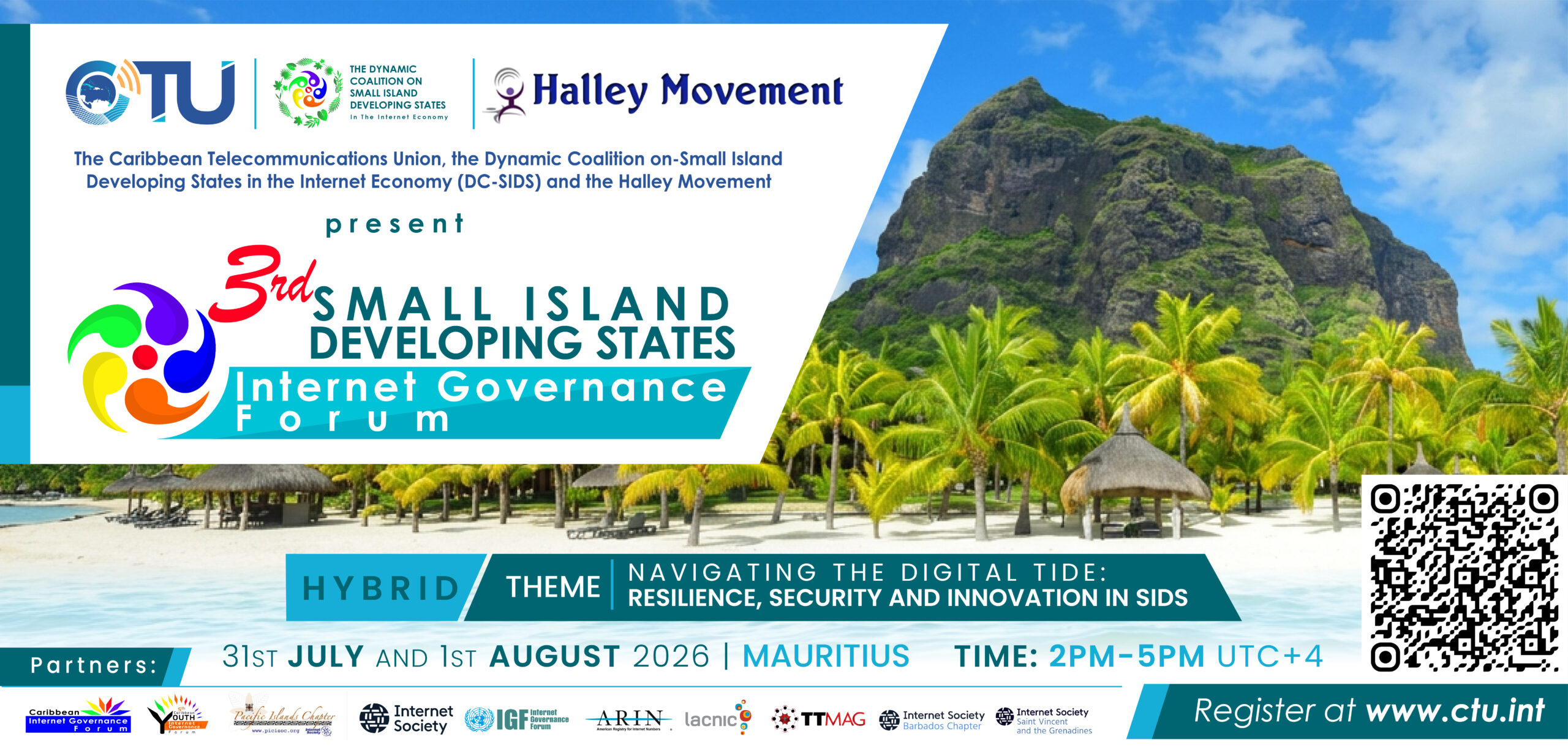
3rd Small Island Developing States IGF (DC-SIDS IGF)
Navigating the Digital Tide: Resilience, Security, and Innovation in SIDS
JULY 31ST and AUGUST 1ST 2026
| DAY 1: FRIDAY 31ST JULY 2026 | ||
| Time | Item | Speaker |
| 14:00 | SIDS IGF High Level Opening Remarks
(5 minutes each) |
Mr. Mahendra Busgopaul, Halley Movement, Mauritius
Mr. Nigel Cassimire, CTU
Mr. Lutchmanah Raj Pentiah Minister of Public Service and Administrative Reforms, Government Mauritius |
| 14:10 | FIRESIDE CHAT: Why the IGF matters for SIDS
|
Moderator:
Ms. Ms. Maureen Hilyard
Mr. Olaf Kolkman Internet Society Ms. Jennifer Chung (IGF Secretariat/MAG) |
| 14:30 | Panel Discussion:
Session 1: The Digital Leap: Transforming SIDS through Secure, Resilient, and Smart Technologies
This theme focuses on the concept of “leapfrogging”—using advanced tools like AI and emerging technologies to bypass traditional developmental hurdles. However, it grounds this ambition in the vital need for protection. It emphasizes that any “smart” transformation must be underpinned by robust cyber resilience to combat DNS Abuse and security threats, alongside physical infrastructure capable of withstanding the realities of climate change. It frames SIDS not as vulnerable, but as agile adapters ready to harness the digital future safely. |
Moderator:
Mr. Nigel Cassimire, CTU
Panelists:
Mr. Tracy Hackshaw, UPU
Mr. Russell Woruba, PNG |
| 15:30 | Session 2: Forging a Resilient and Trusted Internet for SIDS (Potential sub-theme)
Emphasizing unity, this theme highlights the critical importance of regional and interregional multistakeholder partnerships, capitalizing on Mauritius’s role as a convening hub. “Resilient” bridges the gap between physical climate vulnerabilities and cyber readiness, while a “Trusted Internet” directly addresses the mitigation of DNS Abuse and the ethical governance of emerging technologies like AI. It positions the IGF as a vital nexus for SIDS to build collective digital strength. |
Moderator:
Mr. Tracy Hackshaw, UPU
Panelists: ● Ms. Cherie Lagakali ● Mr. Shernon Osepa, CTU |
| 16:30 | Wrap up of Day 1 | |
| DAY 2 – SATURDAY 1ST AUGUST 2026 | ||
| Time | Item | Speaker |
| 14:00 | RECAP OF DAY 1 | Mr. Tracy Hackshaw, UPU |
| 14:15 | Session 1: From Climate Frontlines to Cyber Frontiers
Small Island Developing States exist on the absolute frontlines of global climate change, and increasingly, on the frontiers of complex cyber threats. This theme uses the concept of an “ecosystem” to link the physical and the digital. It promotes discussions on how to build interconnected resilience—where AI and emerging technologies are utilized to monitor and mitigate climate impacts, while stringent digital governance and technical measures are deployed to eradicate DNS Abuse and protect the integrity of the Internet ecosystem. |
Moderator:
Pua Hunter, Cook Islands
Panelists: • Mr. Ewan Cameron, International Climate Change Engagement Coordinator, SPREP, Niue • Dr. Arlene Laing, Coordinating Director, Caribbean Meteorological Organisation (CMO) |
| 15:00 | Session 2: Charting Our Own Course: Digital Governance, Security, and Innovation in Small Island States (Potential sub-theme)
This theme leans heavily into the original mandate of the SIDS IGF: giving island nations a strong, unified voice in global Internet governance. “Charting Our Own Course” speaks to digital autonomy and proactive policymaking. It covers the necessity of drafting local and regional policies to manage the rapid rise of AI, formulating strong defenses against DNS Security Threats, and ensuring that digital infrastructure investments are inherently climate-resilient. It is an empowering call to action for policymakers, youth, and technical communities.
|
Moderator:
Ms. Maureen Hilyard, Cook Islands
Panelists: • Mr. Ian Tairea (Cook Islands, Pacific) • Ms. Sarahjean Pierre, Mauritius IGF • Mr. Nigel Cassimire, CTU |
| 16:00 | Mauritius IGF Closing Remarks & Call to Action
Closing DC-SIDS IGF |
|
| 17:00 | END OF SIDS IGF 2026 | |
Day 1 | |
|---|---|
| Russell Woruba | SIDS IGF 2026 Digital Leapfrogging Russell Woruba July 30 |
Day 2 | |
| Dr. Arlene Laing | Caribbean Multi-hazard Environment and Role of National Meteorological and Hydrometeorological Services |
 Senior Digital Economy Strategist, Universal Postal Union (UPU) Tracy Hackshaw Tracy Hackshaw is a highly experienced Senior Digital Economy Strategist with over 25 years of experience in digital implementation and leadership across the private and public sectors, spanning local, regional, and international contexts. He currently serves as the Head of the .POST Business Management Unit, Postal Technology Centre at the over 150 year old Universal Postal Union (UPU), a United Nations system agency in Bern, Switzerland; a role he has held since September 2021. In his current role at the UPU, Tracy leads and manages all activities related to the .POST Top Level Domain (TLD) and a rapidly evolving Cyber Resilience Programme portfolio. This includes strategic planning, technical and legal oversight, marketing, business development, policy, and compliance. A key focus is positioning . POST as the premier secure and trusted digital platform for the global postal and logistics sector. One of his first projects involved the launch of CYBERTRACK.POST, a fully automated, web-based dashboard for real-time monitoring of .POST domains’ technical compliance with cybersecurity policies. He is working on expanding its functionality to improve overall Cyber Resilience, including integrating DNS abuse/security threat reporting. At present, he is leading the implementation of SECURE.POST, an online portal for cybersecurity awareness and training, and the Postal and Logistics Sector Information Sharing and Analysis Centre (POST-ISAC), which focuses on improving the cybersecurity posture of the postal and logistics services’ value-chain through collaboration, information sharing and capacity building. |
 Deputy Secretary-General and Head of Regional Policy Development Nigel Cassimire Nigel Cassimire is a telecommunications engineer with over thirty years of experience in the technical, operational and executive management of telecommunications systems and services. He has intimate understanding of a broad range of information and communications technologies and services, with practical experience in network and service planning, operations management and domestic and international telecommunications policy development. Mr. Cassimire has functioned as a Consulting Telecommunications Specialist since July 2005 and has worked extensively with the Caribbean Telecommunications Union (CTU) Secretariat in Port of Spain developing and promoting harmonised Caribbean positions in the areas of spectrum management, Internet governance and ICT policy. He has also successfully conducted consultancies for several of the member governments of the CTU. Mr. Cassimire has Bachelor’s and Master’s degrees in Electrical Engineering as well as a Diploma in Management Studies from The University of the West Indies, St. Augustine. He is a fellow of the Telecommunications Engineering and Management Institute of Canada (TEMIC) and an alumnus of the Advanced Management Programme at INSEAD, Fountainbleau, France |
 Development Consultant, Internet Society; Cook Islands Internet Action Group (CIIAG); PICISOC Maureen Hilyard Maureen is a senior Pacific policy leader with more than two decades of experience working across regional governance, digital transformation, economic development, and multi-stakeholder policy processes. She has had extensive experience advising governments, international organisations, and regional institutions on strategic initiatives relating to digital transformation, environmental sustainability, and regional cooperation. She has demonstrated ability to lead complex regional initiatives involving governments, development partners, civil society and the private sector. She is currently working as a consultant on infrastructure safeguards and development programmes in the Cook Islands while serving in leadership roles within international governance organisations – the Internet Society and DotAsia, as well as former Chair of the At-Large community of ICANN. She is also recognised for her ability to build collaborative partnerships across diverse stakeholder groups and to translate policy priorities into practical programmes and initiatives that support sustainable development in the Pacific. |
 Executive Advisor And Spokesperson, Internet Society Olaf Kolkman Olaf Kolkman is Principal at the Internet Society. He has three decades of experience in Internet technology and policy, with a particular focus on the Internet’s security and trustworthiness. At the Internet Society, he serves as an executive-level advisor and spokesperson. He develops strategy, analyzes issues, and advises on technical and policy matters. After studying astronomy, and before joining the Internet Society about 12 years ago, he worked at the RIPE NCC and led NLnet Labs, a non-profit organization focused on open-source software and open standards. Since 1997, he has been an active participant in the IETF, where he has co-authored 17 RFCs, chaired several working groups, and served for six years on the IAB, including four years as chair. He currently serves on several supervisory and advisory boards, including the supervisory board of SIDN (the .NL registry) and the Multistakeholder Advisory Group (MAG) at the IGF. |
 Chair, IGF Multstakeholder Advisory Group Jennifer Chung Jennifer Chung is the Vice President, Policy for DotAsia Organisation. She is the current appointed Chair of the IGF Multistakeholder Advisory Group (MAG member 2025, 2018-2020; Expert Working Group 2022, 2026). She served as the co-convenor of the Informal Multistakeholder Sounding Board for the WSIS+20 review. She heads the IGFSA Secretariat which provides support to the IGF and grants to National, Regional and Youth Initiatives. She serves in the APrIGF Secretariat and amplifies APAC contributions on Internet governance. Ms. Chung represents .Asia Registry at ICANN, is the GNSO Vice Chair and topic lead on DNS Abuse mitigation policy development. Previously, she headed the ICG Secretariat that oversaw the IANA stewardship transfer from the US to the global multistakeholder community. Ms. Chung is on the ISIF.asia Committee that awards grants supporting Internet development in APAC. She is in the core Secretariat of TCCM, a group of critical Internet infrastructure operators dedicated to strengthening the multistakeholder approach to Internet governance. She works on IDN policies and supports Universal Acceptance, a foundation for a multilingual Internet. |
 Consultant, Kairos Kapacity NZ Cherie Lagakali Cherie Lagakali is a Pacific digital inclusion and online safety specialist with extensive experience working across the region at the intersection of technology, policy, and community resilience. She is recognised for delivering “practical, contextually grounded advice and high‑quality analysis under tight timeframes” and has supported governments, regional organisations, and development partners to strengthen digital participation and cyber capacity. Cherie is the Founder of Kairos Kapacity NZ, a Pacific-led storytelling and digital confidence platform dedicated to uplifting women, communities, and underrepresented groups through culturally grounded content, mentoring, and capability building. Her regional work includes leadership roles with Netsafe NZ and the Global Forum on Cyber Expertise (GFCE), where she contributed to multi‑stakeholder engagement, digital policy dialogue, and Pacific-led approaches to cyber capacity building. She also serves as a member of the UN Internet Governance Forum Multistakeholder Advisory Group. Cherie brings a blend of technical insight, cultural fluency, and inclusive leadership to every space she contributes to. |
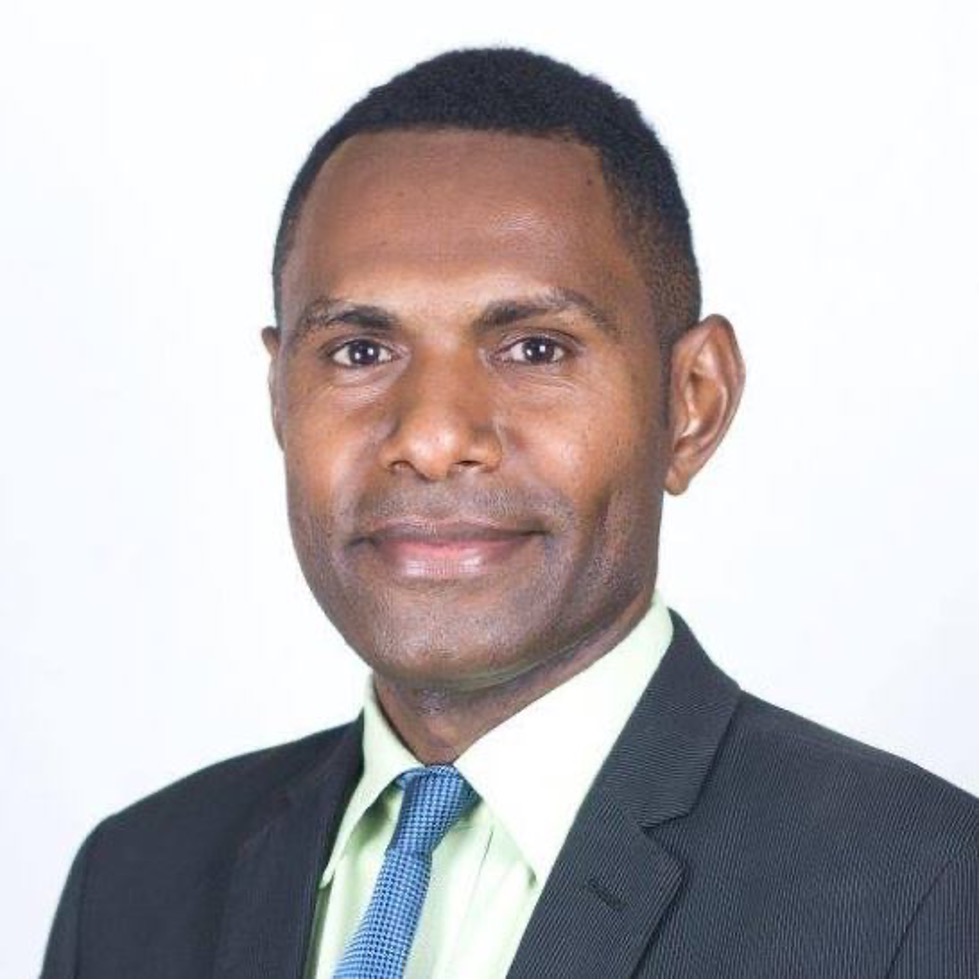 Deputy Secretary, PhD Researcher, Poland, PNG Department of Information and Communications Technology (DICT) Russell Woruba Russell Woruba is a Papua New Guinean digital-government official and PhD researcher at the University of Information Technology and Management in Rzeszów, Poland. His research examines how Digital Public Infrastructure, institutional trust and interoperable systems in Europe can advance innovation, productivity and economic resilience. In Papua New Guinea, he works on digital government coordination and delivery, with experience spanning digital identity, interoperable government platforms and public-service transformation. Russell’s interests include Internet governance, cybersecurity, AI readiness, digital sovereignty and inclusive development. Russell representing PNG and the Pacific on ICANN GAC, PacIGF, APNIC and the Internet Society. He brings a Pacific perspective to building secure, resilient and people-centred digital economies across Small Island Developing States. |
 Educator/Technologist, Cook Islands Internet Action Group (CIIAG) Vaipunu Ian Tairea Ian is a Cook Islands technologist building digital resilience from one of the Pacific’s remotest frontlines — Mauke, an island of fewer than 300 people with no hardware store and slow, costly shipping. A self-taught digital generalist and former teacher, he founded AkatokaNET, a Starlink mesh that shares resilient internet across island households, and Sunrise Labs, through which he builds education, AI and IoT tools for island life. His work spans Galaxy Maps, an interactive learning platform, and Te Kupenga, a sovereign-AI initiative for the Pacific. Ian’s throughline is simple: use technology to raise the capabilities of Pacific people — and to prove small islands can chart their own digital course rather than inherit someone else’s. |
 Cybersecurity Consultant, Cook Islands Internet Action Group (CIIAG) Tepua Hunter Pua brings over thirty years of experience within the Government of the Cook Islands, specialising in ICT, digital transformation and cyber development, including twenty‑five years in senior leadership roles. She has represented the Cook Islands at regional and international ICT forums, contributing to high‑level discussions on ICT and digital resilience. As Pacific Hub Director for the GFCE for two years, she led regional coordination efforts and strengthened Pacific engagement in global cyber initiatives, working closely with governments, regional organisations and development partners. She continues to support Pacific countries in cybersecurity capacity building, internet governance and digital transformation. |
Partner/s